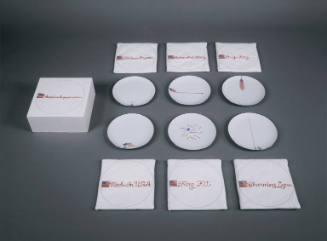
Permanently MAD: Revealing the Collection
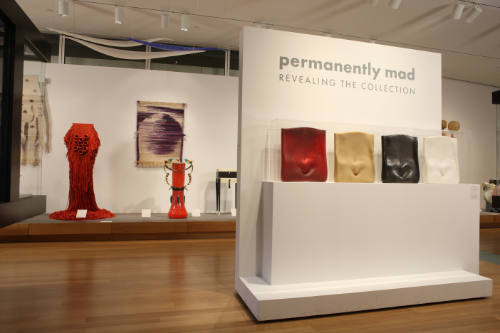
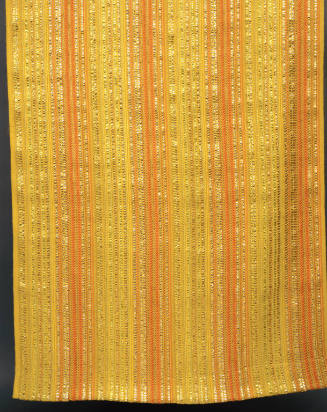
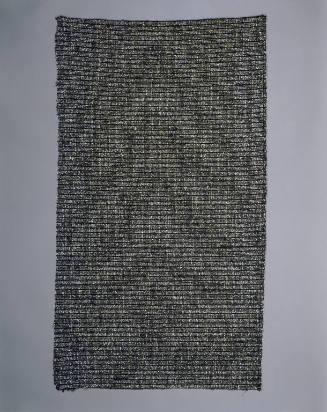
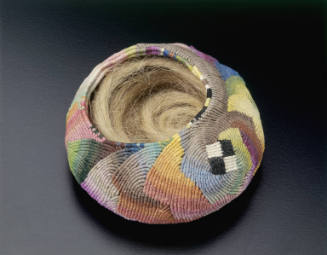
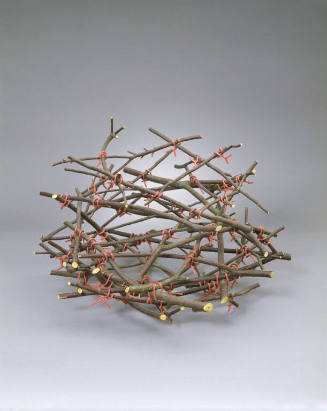
Permanently MAD: Revealing the Collection opened at the Museum’s new home at Columbus Circle and featured the work of groundbreaking artists and designers from the 1950s through the present day, including Jack Lenor Larson, Wendell Castle, Louise Bourgeois, Peter Voulkos, George Segal, Cindy Sherman and Betty Woodman, among many others. The exhibition traced the phenomenal rise of the studio craft tradition in America following World War II and its evolution into a dynamic synthesis of art, craft, and design in the global arena today. Holly Hotchner, the Nanette L. Laitman Director of MAD, said, “Today the Museum occupies an important place in the cultural world as it continues to expand its collections in all of the related fields—art, design, fashion, architecture—where the values of traditional craftsmanship are of critical importance.”
Organized thematically, Permanently MAD offered visually stimulating comparisons among works that share a common concept. The works were grouped into three thematic sections that introduced the viewer to different ways of approaching contemporary art: “Description” explored the work’s visual language or aesthetics; “Intention” showed the ways in which artists express their inner thoughts and feelings; and “Reflection” looked at the political, social and geographical context in which the work was created. These thematic groupings were introduced by “Seeing the Object,” a section that encouraged viewers to appreciate the visual language of an object through examination of form, color, and pattern. Permanently MAD also included a special section, “Origins,” which paid homage to the artists who created America’s studio craft movement.
The exhibition was organized by David Revere McFadden, chief curator, and Jennifer Scanlan, associate curator, with assistant curator Laura Stern. The installation was created by Dorothy Twining Globus, curator of exhibitions, working with architect Todd Zwigar
Permanently MAD: Revealing the Collection is made possible in part through the generosity of the Collectors Circle, one of the Museum’s leadership support groups.