

Creative Casting
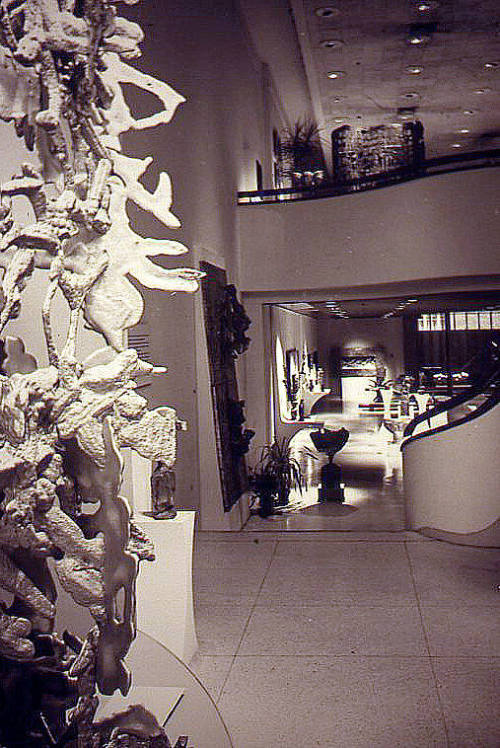
Creative Casting presented a survey of current casting work and illustrated a broad range of metal objects, giving insight into how the tradition of metal work experienced a burst of creativity in the early 1960s. This innovation was spurred by the desire of artists to have direct involvement with casting metal on a large scale. Although many jewelers were doing small-scale casting in their own studios, most large work had to be done in professional foundries and was expensive. Consequently, artists established personal studio foundries where they could work directly on a piece, rather than only creating a model that was ultimately produced in a commercial foundry. Most foundries were affiliated with university art departments, particularly UC Davis in northern California, but some artists developed their own facilities or cooperatives.
Creative Casting focused on the experimentation taking place in the independent casting facilities, where new ideas could more easily be explored. The exhibition highlighted novel works like those of Harold Paris, who casted found elements into “pop” forms, and Nancy Glenn, who created wall sculptures from cast twigs. Renowned artists and jewelers, such as Julius Schmidt, Harry Bertoia, John Prip, Stanley Lechtzin, and Robert Winston, were also represented. Additionally, the exhibition actually had a section that illustrated the casting process in order to give viewers a better understanding of the techniques involved and foster a deeper appreciation for the pieces that were created by the featured artists.